1. What’s Really Happening to the Almanzora Valley?
- Organically Written by a human without AI generation
The Almanzora river basin is situated in one of the top 3 driest places in Europe. It is also counterintuitively one of the most productive regions due to the intensive agriculture industry here, supplying the continent with fresh produce.
Because of the geography the area has always been dry since people have inhabited it, the issues faced today have been a long time coming. Fossil water deposited and filtered over millennia has allowed sustained growth of populations as technology has evolved, allowing us to tap further down into the aquifers underneath the valley floor.
There isn’t 1 single reason that can be pointed out and remedied.
Key factors contributing to the situation:
1. Continuous land use change. Particularly in this location- we can easily see the growing number and size of monocrop plantations which have several impacts.
o How much water does one of these facilities use per square meter?
- Typically, using figures from the internet and taking the mean average to account for variations due to specific factors of each site, a randomly chosen 34-hectare plantation crudely measured on google maps uses 102,000 cubic meters of water per year.
o Are there more to come?
- They are profitable in the short-term meaning corporations and cooperatives are sure to capitalize on the opportunity to snap up degraded cheap land and promise the authorities improvements to work opportunities, taxes etc.
o Are they a net benefit or a drain on the area
- Not a clear answer but in the short term, they are a benefit in terms of generating income for all involved to varying degrees. Long term though, they are a worrying drain (literally) on already dwindling resources. Unless they are held to account and forced to contribute in some way they will swallow up available remaining water and be able to drill deeper (very expensive the deeper you go) compared to small independent farms, putting them out of business.
2. We have noticed the increase in intensity and duration of droughts yearly and on multi-year instances.
3. Traditional Farming Practices are outdated and consequently - inefficient with agricultural water use. Transportation of the water itself relies on outdated systems of concrete troughing in some places. Then there is the historic illegal tapping into water supplies further exacerbating the problem.
4. Wildfire affecting the area, at first you could have suspected this part of the region would be protected from wildfire given the location being a river basin surrounded by mountainous terrain.
o The quantity and severity of wildfires has increased and continues to do so across the continent.
5. Habitations are still being built
6. How is the area affected by heavy downpours?
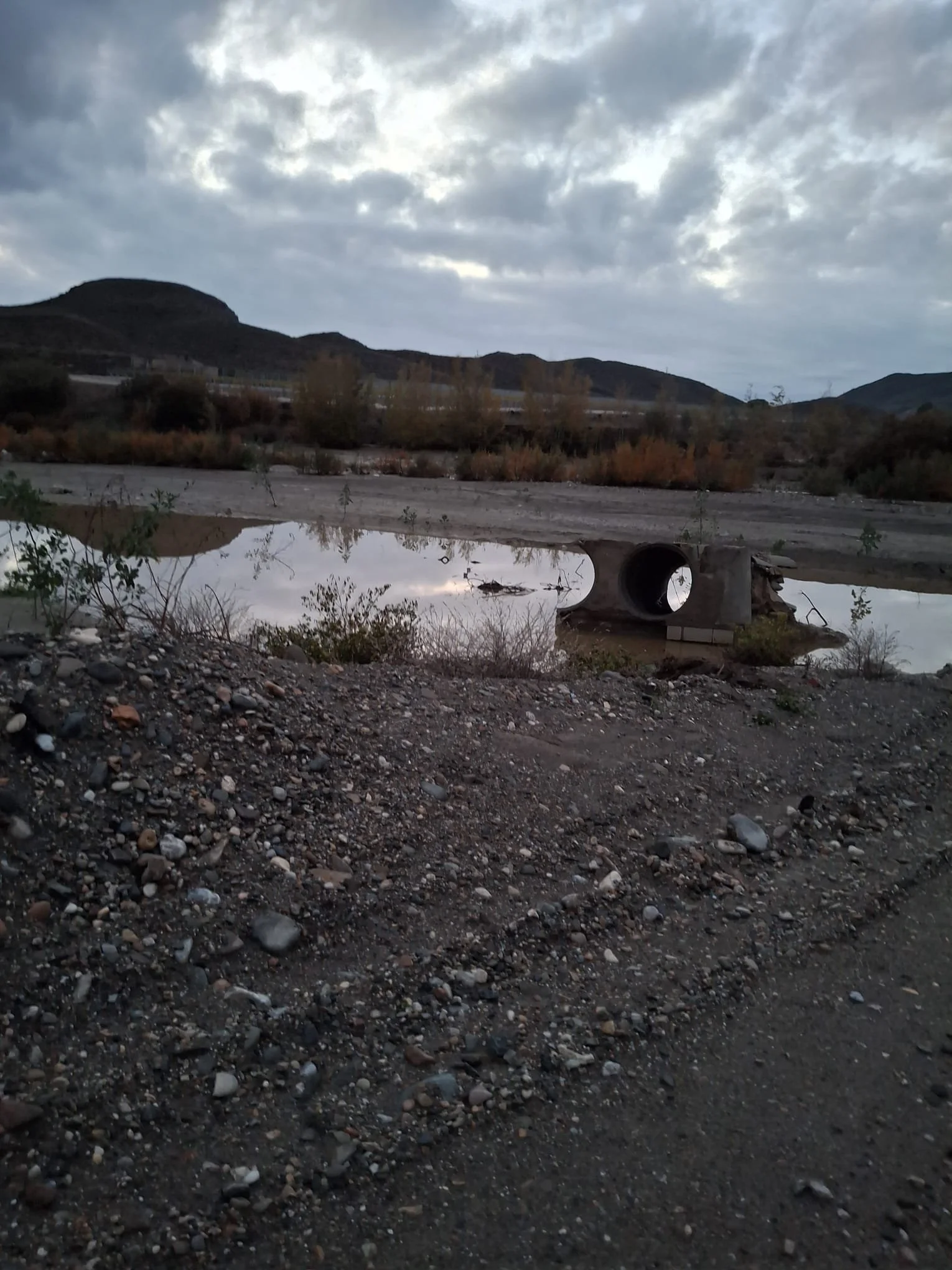
Every year, the river in the centre of the ramblas runs for days at a time following a heavy downpour, although it’s a relief to see running water once the initial surge has gone, they can and do cause some damage. By carrying heavy debris which has a destructive effect. Roads can be damaged, drainage blocked and salts and contaminants are all washed over flooded land into the watercourse as well.
Historically there are records online showing spates of extreme flooding leading to loss of life, livestock and property over the last 500 years. The impact on people being exacerbated by changes of land use, and development of property on the banks of the river. The most recent and devastating being the 1973 flood which lead to many unfortunate fatalities, loss of property and livestock.
This part of the region is described as semi-arid Steppe; it is known as the consistently driest place in Europe in terms of precipitation.
How it relates to the regeneration project
We wouldn’t just be writing about the problem without thinking we have a solution to it. Rather than see it as impending doom, or a foregone conclusion which we must accept, it can be viewed as a challenge to be overcome making the area better for friends and family to live, as well as native wildlife - another key stakeholder massively depopulated in the area that could benefit from a refreshed environment.