12. Desertification in Almería: Is Nature Failing, or Are We Failing Nature?
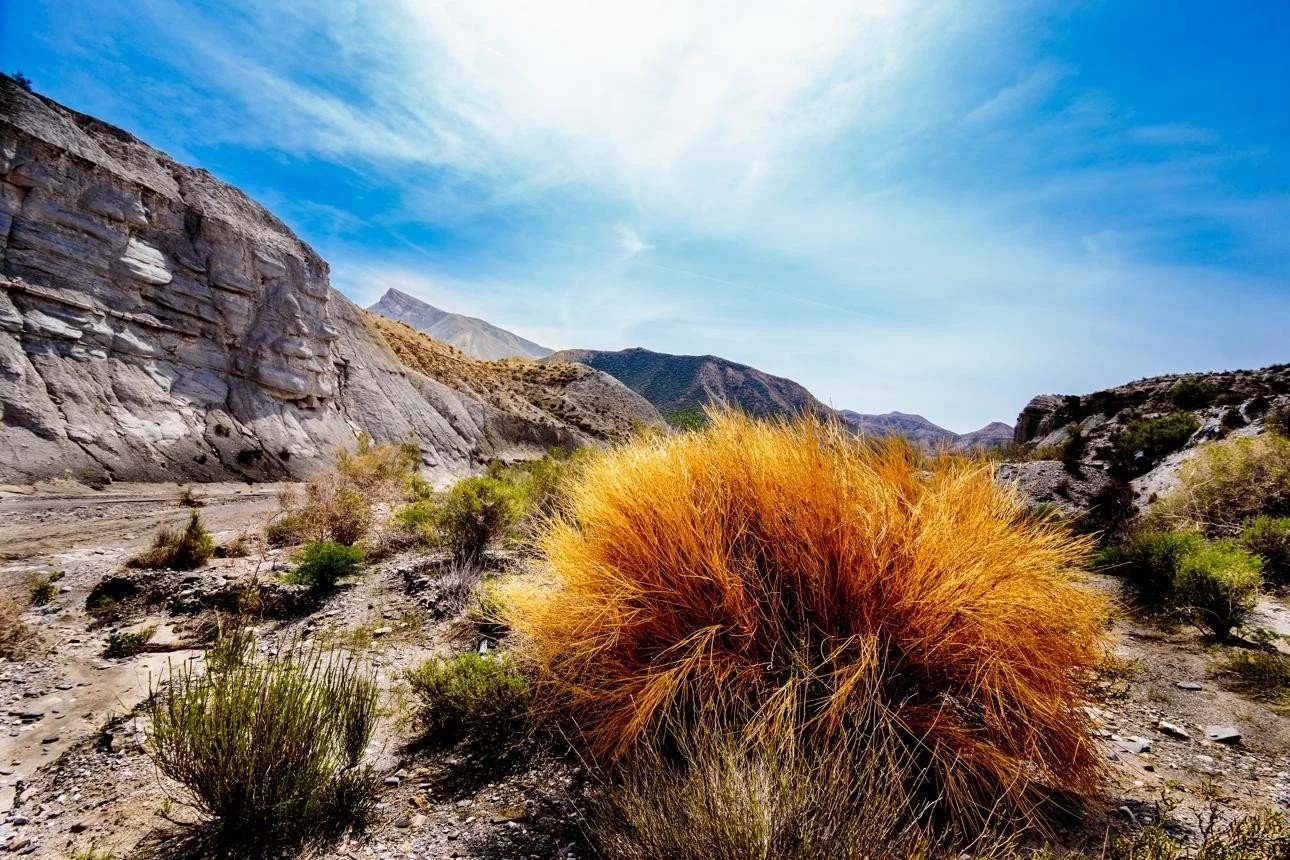
Regarding the region (south-eastern Spain), I believe that the reason for desertification is the interaction between the 3 factors listed, not singly just one being the root cause. A bit like the Fire triangle (oxygen, heat and fuel) you need them all there to some extent to explain why things are happening the way they have been. By breaking them down first you get an idea of how they interact with each other. Below I attempt to explain why I think that despite all 3 factors being integral to the process, I think the Socio-Economic factor has the deciding impact as it drives the others. I also think Ecological outcomes are the visible symptoms of dysfunction presented by the other 2 processes. Choices made in the Socio-economic space being the driver from either degradation or aggradation on a regional scale throughout history, and pertinently to us- in the present day.
What Desertification actually means
The definition of desertification is:
“(a) “desertification" means land degradation in arid, semi-arid and dry sub-humid areas resulting from various factors, including climatic variations and human activities;
(b) "combating desertification" includes activities which are part of the integrated development of land in arid, semi-arid and dry sub-humid areas for sustainable development which are aimed at:
prevention and/or reduction of land degradation;
rehabilitation of partly degraded land; and
reclamation of desertified land;
(c) "drought" means the naturally occurring phenomenon that exists when precipitation has been significantly below normal recorded levels, causing serious hydrological imbalances that adversely affect land resource production systems;
(d) "mitigating the effects of drought" means activities related to the prediction of drought and intended to reduce the vulnerability of society and natural systems to drought as it relates to combating desertification;
(e) "land" means the terrestrial bio-productive system that comprises soil, vegetation, other biota, and the ecological and hydrological processes that operate within the system;
(f) "land degradation" means reduction or loss, in arid, semi-arid and dry sub-humid areas, of the biological or economic productivity and complexity of rainfed cropland, irrigated cropland, or range, pasture, forest and woodlands resulting from land uses or from a process or combination of processes, including processes arising from human activities and habitation patterns, such as:
soil erosion caused by wind and/or water;
deterioration of the physical, chemical and biological or economic properties of soil; and
long-term loss of natural vegetation;
(g) "arid, semi-arid and dry sub-humid areas" means areas, other than polar and sub-polar regions, in which the ratio of annual precipitation to potential evapotranspiration falls within the range from 0.05 to 0.65;
(h) "affected areas" means arid, semi-arid and/or dry sub-humid areas affected or threatened by desertification;
(i) "affected countries" means countries whose lands include, in whole or in part, affected areas;
(j) "regional economic integration organization" means an organization constituted by sovereign States of a given region which has competence in respect of matters governed by this Convention and has been duly authorized, in accordance with its internal procedures, to sign, ratify, accept, approve or accede to this Convention;
(k) "developed country Parties" means developed country Parties and regional economic integration organizations constituted by developed countries.”
(According to UNCCD FAQ | UNCCD )
Although climate change is a natural occurrence over geological time periods, desertification is a phenomenon which existed before the industrial revolution and the burning of fossil fuels. I posit that the present day acceleration of the desertification process is driven primarily by Socio-economic factors, and that halting and then reversing this process must be driven by a change in them.
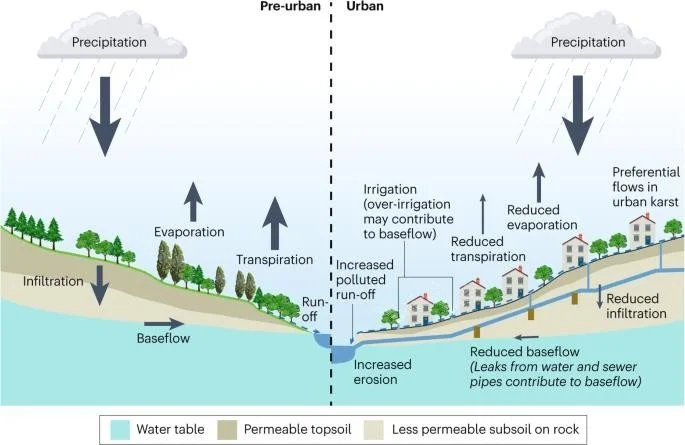
Diagram comparing pre-urban to urban hydrology
The hydrological perspective
Hydrologically speaking you have the input (300mm precipitation per year, in flashy, flood heavy storms concentrated in the October – April months). The rainwater hits the ground consisting of desiccated soil, rock and gravel on caliche ramblas, karst limestone hills in nappe tectonic mountain ranges etc.
This set of parameters lends itself to a semi-arid climate in a tough, dry, quick draining landscape. Alone this makes for a hot & dry picture which sounds like it welcomes the status of a desert. Farming & population consumption has reduced groundwater levels so far that the sea is actively pushing its way in through groundwater aquifers making them saline, massively reducing fertility of the land.
Increased impermeable surfaces
Where there are people, there are homes, businesses and roads. All of these have a major impact on the landscape which tends towards impermeable surfaces that will not allow the absorption of rainwater, and that transfer to groundwater. Instead, we create our own Hydrological systems to go with them in the form of gutters, drains and drainage ditches/channels. What these do is effectively cut huge areas of water out of the natural cycle and concentrate it into diverted streams straight towards the sea. (The most recent trends indicate the ratios of land use are moving towards more of this issue rather than less as per Area by land cover | Spain (1992−2022) − Data, Charts & Analysis)
Prescence of some Karstified Limestone and Nappe tectonics geological structures
The geology of the Almeria region itself isn’t prohibitive to infiltration and recharge of aquifers. The limestone is porous enough to easily sequester water deep into the earth. Nappe tectonics, evident from observations on the ground show where upended rock layers from tectonic movements in the Pleistocene era are another feature of the landscape which can allow for the sinking of water, and transport of it underground, they are unpredictable too meaning there’s the opportunity for water to traverse laterally across the undulating hills and valleys, appearing in surprising locations further along the watershed. These factors neither guarantee nor rule out groundwater movement, but they provide possibility of it based on examples found elsewhere on the planet.
Risk of salination of groundwater.
More pertinent to the southern extremity of the Almeria province, where there was once a full aquifer of freshwater, this has been depleted over time. There are 2 issues with soil salinity. Further inland - Soil salinity increase can result from evaporite dissolution, evaporative concentration, irrigation return flows and other geological or agricultural influences. The mining activity in the area also left many deep impressions on the landscape which have slowly backfilled with water. The second issue with is in the more coastal areas is that the water that now back-fills there is far more saline. Due to salinity washed from further upstream having nowhere to go and also because once extracted freshwater is gone the gradient between it and that of the salty seawater is more extreme so naturally the saltwater is filling the gap and making its way inland. This makes land far less fertile for most plant life causing it to be of little use to society as well as making it far more difficult for beneficial flora and fauna to return to the now abandoned land and reverse the damage done.
Existing hydrological infrastructure
- Old Quanat systems
- Roman aqueducts
- Modern reservoirs, Dams and aqueducts
How does this relate to desertification?
These conditions mean the region is prone to tipping the scales from a Mediterranean forested/savannah & pasturelands environment - into a desert. The whole of western Europe is at risk from repeated severe droughts due to climate change, with rivers drying up in capital cities further north than Spain. With that in mind we also know that with the appropriate populations and demands on this specific ecosystem that nature and societies can thrive in relative abundance providing the precipitation is held and slowly released downstream, being extracted in a far more controlled manner.
Desertification is increasing across the planet, Europe is not immune to this change in climate with 23% at risk of desertification in Europe’s most southern extremities (See, The-increasing-threat-of-desertification-to-Europe-TERRASAFE-IEEP-2025.pdf). For Almeria, If no action is taken the process which is already underway will likely build momentum and deteriorate quicker as in total, each year with there is less organic matter across the region holding the water in place and acting as a buffer for the rest of the country. Even if left alone, the scales could potentially be tipped in the direction of decline into arid desert for more of the region, making way for higher temperatures and more potent flood events, contributing to the negative feedback loop in the area hydrologically speaking.
The ecological perspective
In ecological terms, the landscape has been reduced to a much higher percentage of scrublands, consisting of desert acclimated plants thrive here because not much else can - unless cared for and irrigated. What was once a mixture of forests in the hills and valleys inland punctuated with rivers, streams and pop-up springs due to the karst geology, was first cleared over time, and grazed and mono-cropped in many places, leaving vast tracts of land barren and fit only for existing scrubland bushes and shrubs which can survive in the degraded conditions. These native Xerophytic plants are adapted to these conditions, and we have unintentionally increased their range. In addition - Invasives have colonised some areas quite well, displacing native plant life which then degrades land further as the invasive plants actively terraform (the process known as Allelopathy) their environments into somewhere only they can survive.
A lot of the greenery that can be seen is agricultural, irrigated and wouldn’t survive if it was disconnected, the species used for food production aren’t suited well to this environment without heavy water supplementation so aren’t really part of the functioning ecosystem.
Forestry once there is now gone, meaning new topsoil production is almost non-existent where it was once abundant and existing soil with all its biodiversity is also lost. Soil organic matter can increase the holding capacity of the soil immensely if present (see Soil Water Retention as Affected by Management Induced Changes of Soil Organic Carbon: Analysis of Long-Term Experiments in Europe), so that potential capability which was once far more widespread has been temporarily lost.
In terms of fauna – this has also been decimated, with some efforts to restore areas for the wildlife that used to live here, the impact of heavy pesticides and fungicides use over the last 100 years as well as the mass loss of habitat - means the animals there once inhabited the region are no longer here. Their impact on the living ecosystem which can adapt and evolve making the most of the weather, and integrating its effects into a living biome has been drastically reduced, and with them the carbon cycling so vital to building the living sponge which prevents desertification is also pretty much gone too.
Biology in relation to desertification is a pivotal factor in terms of how the land reacts to the conditions imposed on it. We see in re-wilding efforts across the globe how restoration of natural grazing patterns for cattle, or reintroduction of keystone species can revitalise an area. Predator re-introduction can create an ecology of fear which as a result reduces the grazing impact on new shoots and younger plants replacing the older ones. If left alone long enough its possible the equilibrium of the past could be retained, however how long it takes is anyone’s guess.
Once it is gone or at least reduced down past a tipping point then the Ecology may never be able to return to what it once was without people lead rectification.
How does this relate to desertification?
The ecological conditions, the status quo and direction of change aren’t just negative symptoms of the other processes, a visible consequence of human activity multiplied by hydrological processes governed by physics. A change further up the chain (e.g. socio-economic changes from policy enacted like a hosepipe ban which would reduce water consumption) would mean more water available for deep rooted plants which can then flourish. A re-introduction of a lost apex predator, or mandated fencing in of grazing cattle can also make direct measurable improvements rather quickly.
If instead you built a new hotel which has a pool, sprinklers etc, the local groundwater levels would understandably drop, and trees and shrubs will wilt and die – exacerbating the problem and leaving barren desert in their place. For this reason, I think Ecological processes aren’t the leading cause of desertification.
The historical and economic pressures
Socio-Economic factors drive all of what we know and do as a species. The implications of these conditions we create (or have placed on us sometimes) sometimes aren’t realised until decades or centuries later when it’s almost too late to rectify.
For example, on the Iberian Peninsula there have been countless socio-economic models, methods of society and booms and busts to contend with, each having long term implications on the hydrology of the region. Here are a few examples:
Pre-History
In times before written history began there have been people in the region and scientific data shows the difference in pollen counts found in ancient samples as mentioned in this paper:
“The complex relationships within modern landscapes cannot be understood without the benefit of retrospective studies. We review paleoenvironmental data for southeastern Spain, a landscape vulnerable to desertification and with antiquity of human pressure on the landscape. A xerophytic component is discernible in the pollen diagrams of the southeastern peninsula ever since the Middle Miocene. During glacial stages of the Pleistocene, mountain grasslands and lowland steppes expanded, but tree vegetation, although episodically contracted, was ever present across the region, explaining part of the modern plant-species diversity. The magnitude of human impacts on vegetation during the Holocene has been highly variable, starting earlier (e.g. after c. 5000cal years BP) in low-elevation areas and river basins. Forest degradation of the mountains started rather late during the Argaric period and reached its maximum during the Roman occupation. Over the last millennia, natural and/or human-set fires, combined with overgrazing, probably have pushed forests over a threshold leading to the spread of grassland, thorny scrub, junipers, and nitrophilous communities. The high degree of xerophytization observed today in southeastern Spain results from the long-term determinism of the Mid to Late Holocene climate aridification, and the contingency of historical factors like fire events and changes in prehistoric local economies involving resource exhaustion.” - The historical origins of aridity and vegetation degradation in south-eastern Spain José S. Carrióna *
The Punic wars fought between Carthage and Rome – saw the terraces and hill farming imported from Carthage be adopted by the roman rulers which would seem a positive, but the romans with their industrious nature, implemented heavy industry (at the time) Mining whole mountains for Ores to fuel their empire, which made extensive use of water by creating Dams, canals, reservoirs etc and using the power of the water to erode whole mountains. (known as ‘Ruina Montium’, famously used at Las Medulas. - Las Médulas (León), un paisaje cultural patrimonio de la humanidad | Trabajos de Prehistoria)
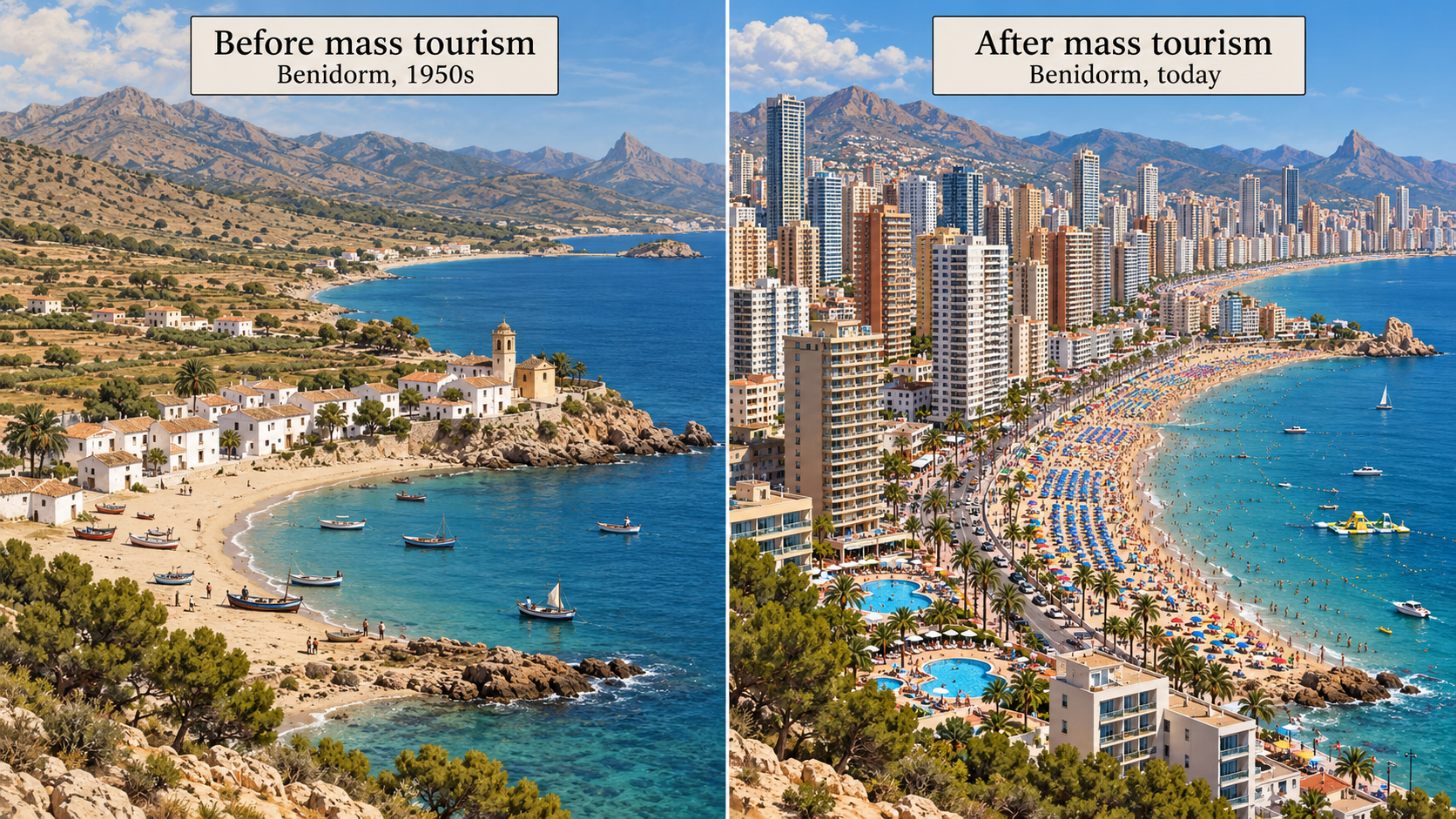
Mass Tourism – from the 1950’s onward saw a massive tendency to develop coastal towns and cities, especially on islands that form part of Spain. The summer holidays being the busiest part of the year are also the hottest, water demand is at its highest, and precipitation is at its lowest level. Still the revenue is what drives the economy, so the tourism industry is always growing, being invested in and its profits re-invested into further expansion. Political lobbying unfortunately creates a self-reinforcing loop with corruption. The socio-economic effect of this being that corruption within governments related to planning and zoning officials creating opportunities to make money at the cost of the local people, public facilities and resources such as fresh water. This happens by Land being purchased cheaply, rezoned and then overdeveloped. Consequently, these developments change from a coastal village or town with natural surfaces, perhaps a river that could flow naturally to the sea, into a densely populated urban centre, covered in impermeable concrete which doesn’t allow water infiltration, many more mouths to feed, irrigation for manicured lawns & golf courses etc. Technological answers such as de-salination plants can plug the gaps but combined these factors all accelerate desertification. This journals paper explores this hypothesis in greater detail “Good and bad effects of corruption and political uncertainty on tourism-growth linkage: World-wide evidence - Chandan Sharma, 2024” and supports the claim that tourism creates opportunities for corruption which then create more investments in tourism related properties and businesses. All of which place increasing demands on natural resources beyond what nature can provide sustainably.
Late-stage capitalism
The concept of late-stage capitalism (economic incentives, agricultural specialisation and resource dependency) is based on the idea that there is a clear disparity between the extremes of poverty and wealth driven by corporate greed which has tipped the balance so far in the direction. Businesses have driven hyper specialisation in almost every field now, and for this example – agriculture there are many examples of Vendor lock in, where commercial entities such as a farm have invested in a specific crop and method of farming it, buying equipment, training and making the modifications to property and skillset for that particular crop and its production method. Once they are fully invested it becomes impossible to revert to another, or simpler practices without incurring a significant financial loss.
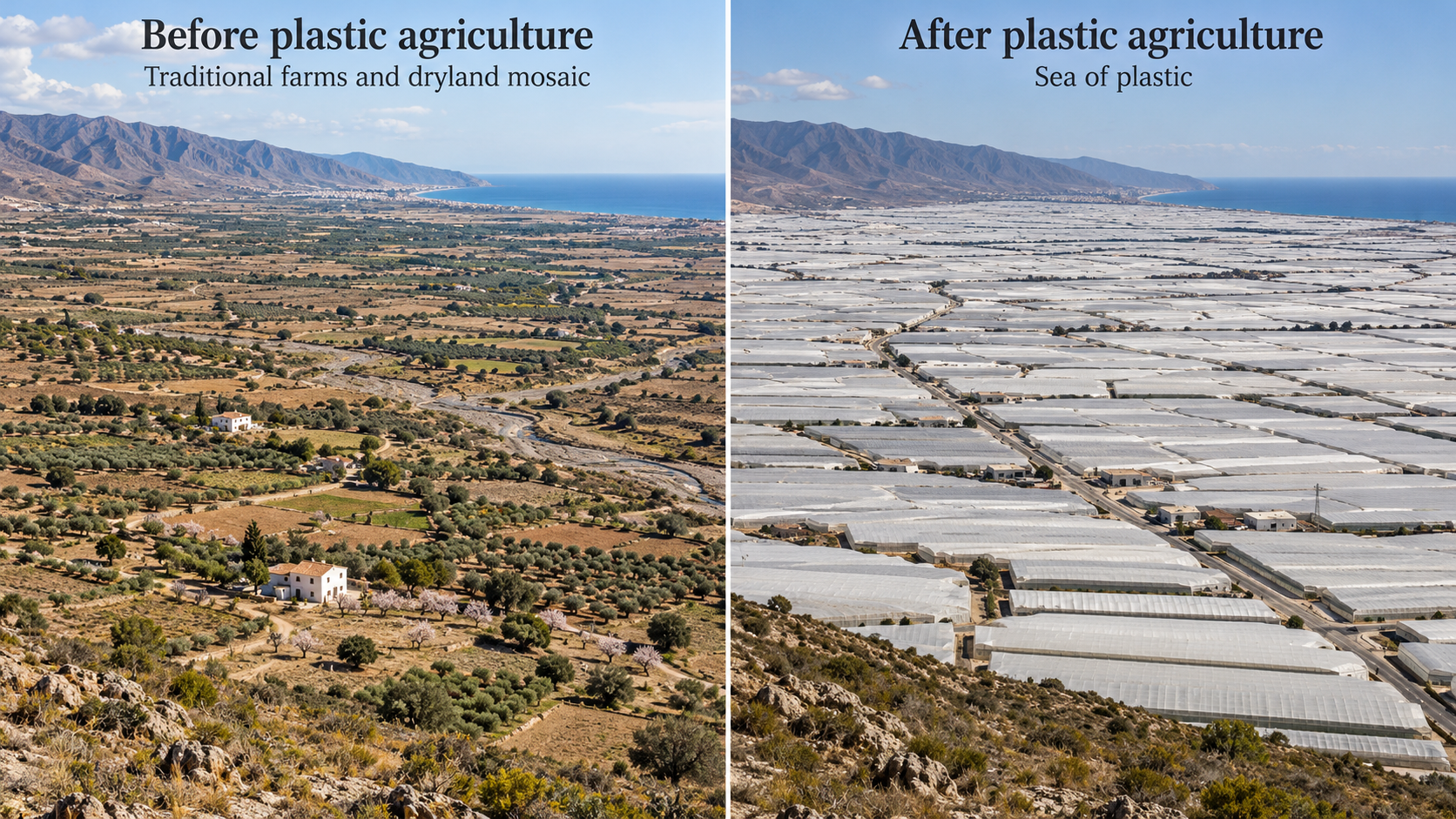
Some examples of this being GM Crops, which are reliant on heavy fertilisation. They are damaging due to their monocrop nature. Not only does it mean the farmer has optimised his land for that single crop, tilling the earth and fertilising based on the plants optimal nutrient profile, but this also means other plants that could have supported it, and the life they support – aren’t there anymore. They possibly cannot survive there and reversing the damage costs too much. The economies of scale on this level of agriculture are at first glance too good not to do. But the market has matured and self-optimised so much now that it’s become its own worst enemy, the farmers are trapped at the mercy of the large conglomerates setting the prices and are vulnerable. Usually, over-leveraged against their personal assets (family-owned farmland) and sensitive to global events and market fluctuations.
These socio-economic factors are the force acting upon the environment that tips people in the wrong direction, towards over-extraction of the resources our land can naturally provide. As we find ourselves in the present – the environment & quality of life is deteriorating and costs and the implications of failure are steadily rising, and these are the primary factors that drive people’s decision making. If these external factors change then the pressure on each region would be alleviated. If there were all of a sudden, no revenue coming in for food exports, and if tourism stopped overnight, would the scales of extraction of resources vs input tip back the other way ? Considering this Study “More than 10,000 pre-Columbian earthworks are still hidden throughout Amazonia, (More than 10,000 pre-Columbian earthworks are still hidden throughout Amazonia | Science)” – bearing in mind its in a far wetter region, it shows that even in places where millions of people once lived. Once the numbers reduced drastically enough, over time nature not only bounced back, but we also couldn’t even see it without advanced lidar imaging and drone technology to find it buried in the vast region reclaimed by dense jungles.
Although that is a cherry picked example, it shows the potential when a pressure is removed on an ecosystem, and the conditions are right.
In our situation though the Ecosystem is already water-controlled, so wont bounce back as rapidly. In this study of the Tabernas, it showed recovery effects over up to 70 years following the cessation of human activity. (Vegetation and soil recovery on gypsum outcrops in semi-arid Spain - ScienceDirect), the difference here is that although diversity of plants increased slowly after 70 years in the most advanced examples studies, without restored or even altered hydrological interventions in these cases. As it states
“From the management viewpoint, the results suggest that: (1) ecological restoration of gypsum outcrops after quarries abandonment is difficult at best; (2) restoration plans should be site-specific in design and monitoring including analyses of the different participating strata and functional groups should follow initial restoration to ensure that soils and plant communities are on the path to recovery.”
So, in short, that becomes a question of how motivated people are to restore it? The biggest motivator driving human activity on the planet right now is economic.
This finding suggests that simply removing human activity isn’t enough for a rapid re-colonisation of plants wed like to see, especially in a human lifetime. It suggests that if conditions are sufficiently changed as they were in these Gypsum outcrop ex-mines then the new equilibrium is reached at desert adapted plants and shrubs as we see there now.
Can nature recover when we stop disturbing it?
What does this mean for Viva Almanzora?
Understanding the causes of desertification is one thing, but can we use that understanding to reverse some of the damage already done?
This is ultimately what I hope to explore through the Viva Almanzora project.
If socio-economic decisions have played such a significant role in shaping the landscapes seen today, then future decisions about how we use the land could begin to influence them in the opposite direction.
Rather than simply abandoning degraded land and waiting decades for nature to recover, could carefully selected interventions accelerate that recovery?
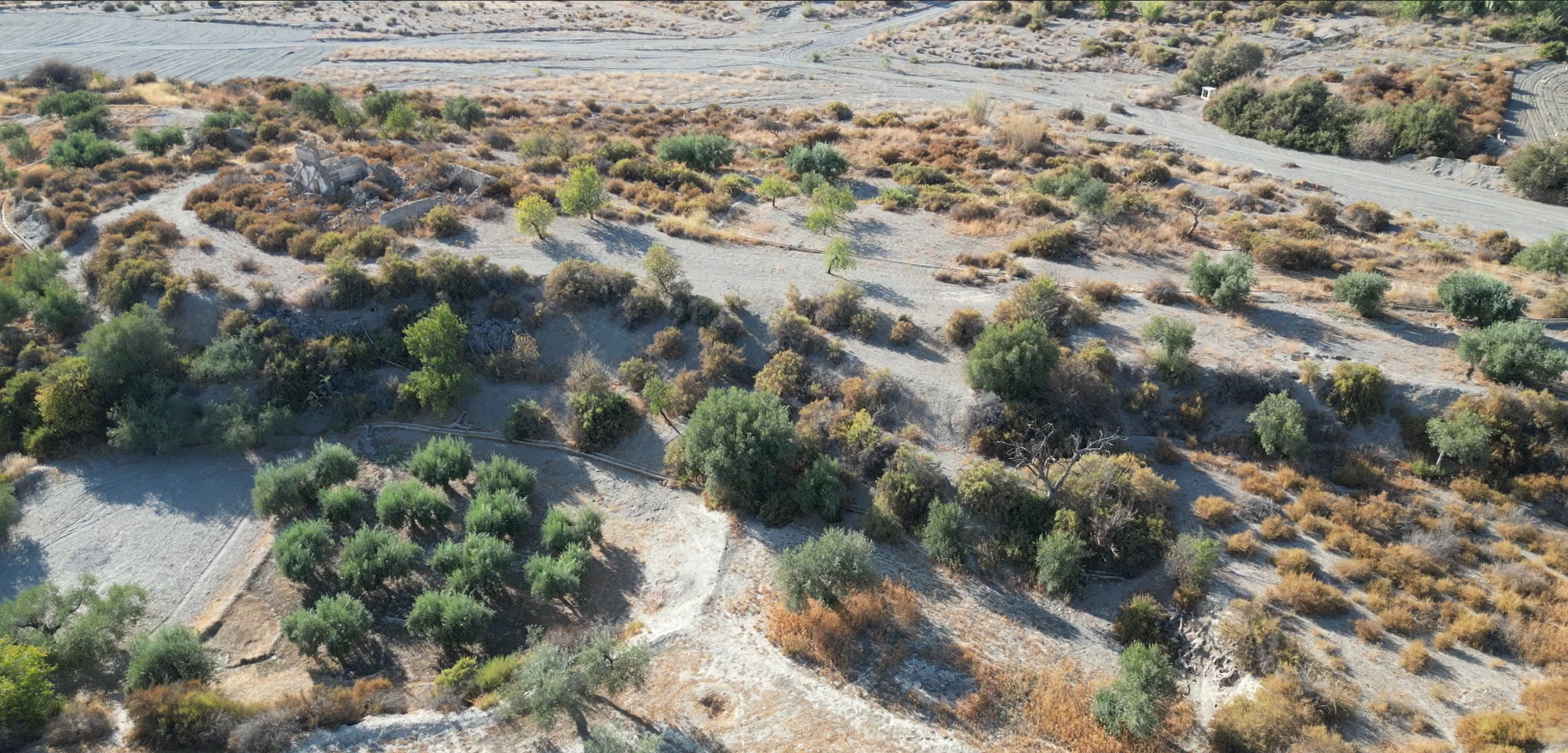
My intention is to establish a pilot site in the Almanzora basin where small, distributed earthworks, native vegetation and improved soil management can be used to influence how rainfall moves through the landscape.
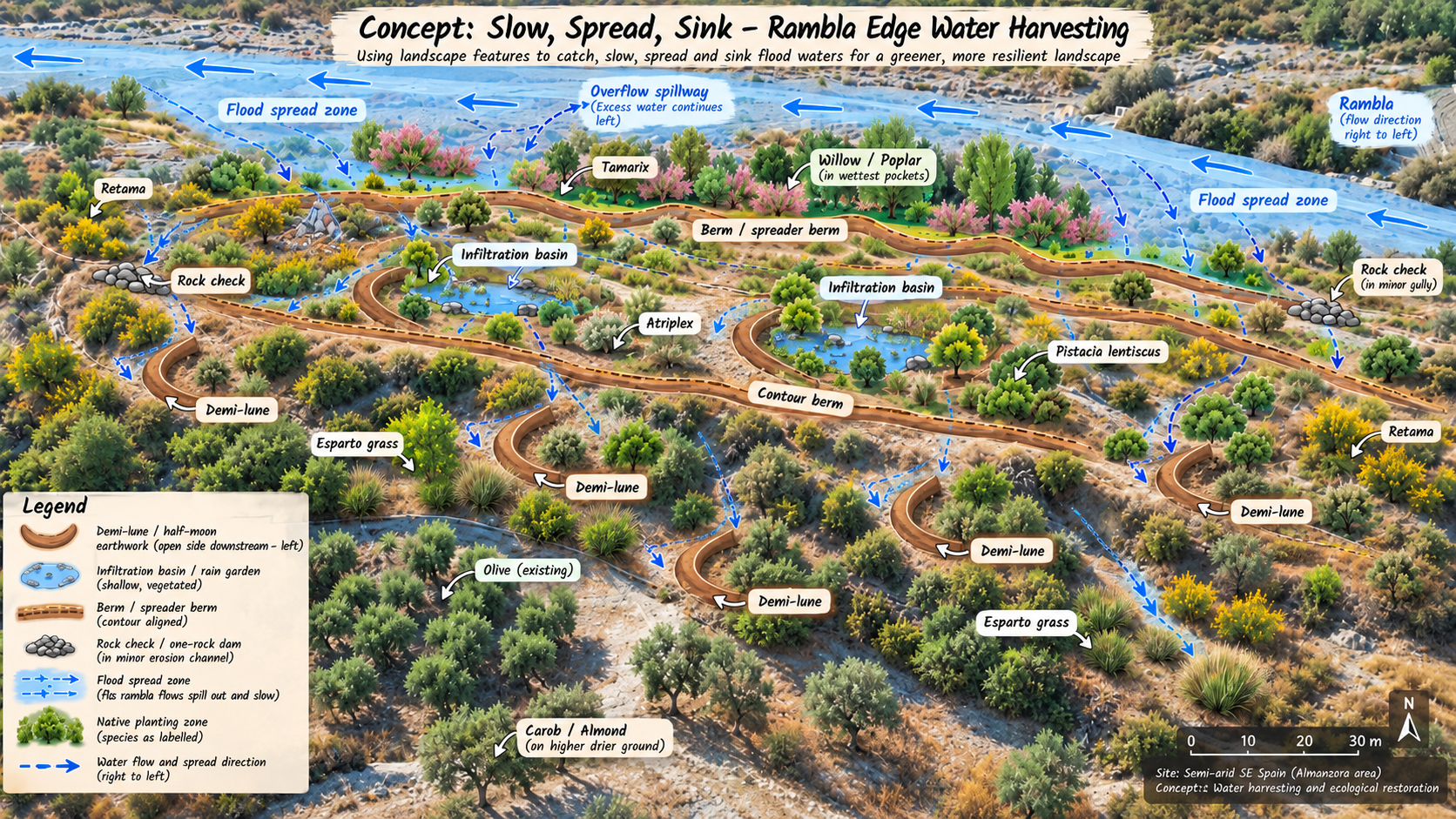
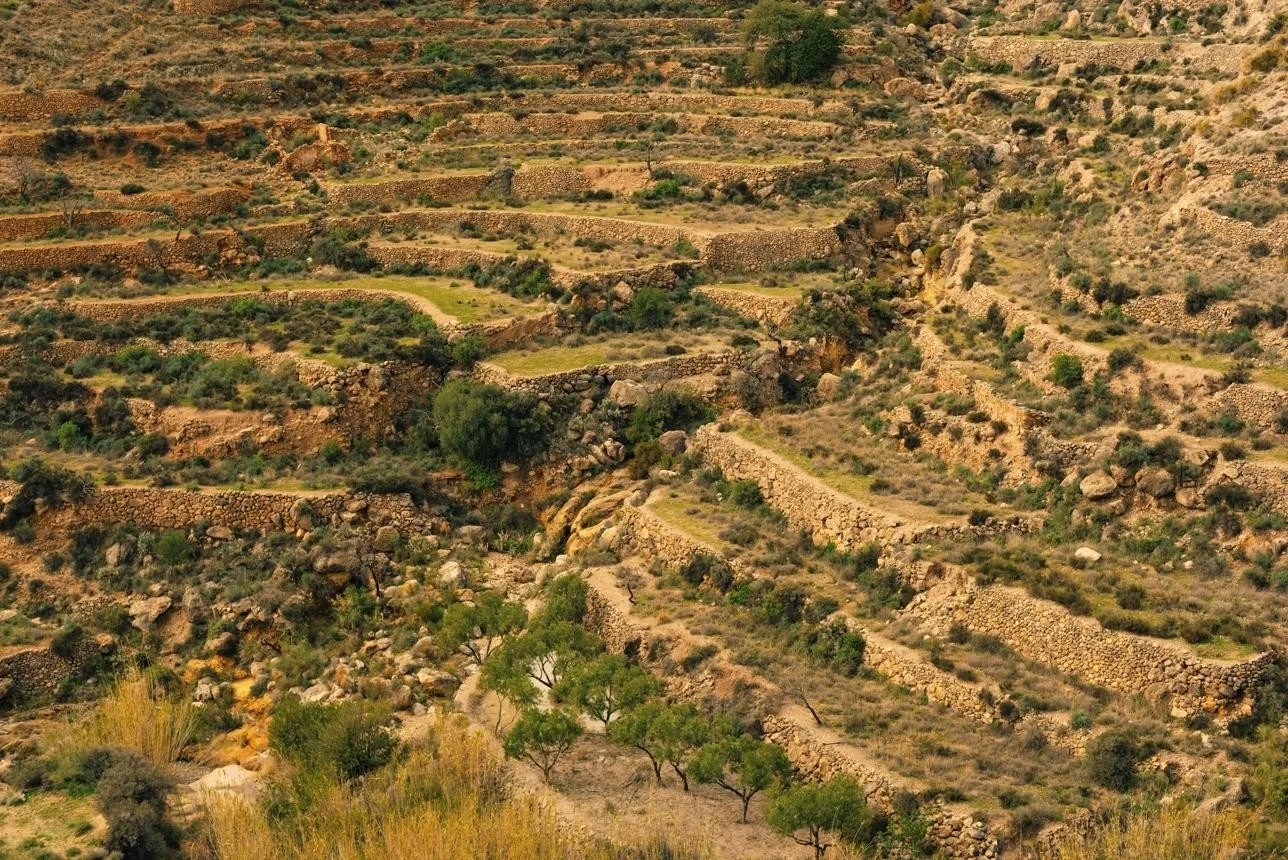
A rendition of what could be done with the area shown in the image above to create a “Flood soaking sponge”
The initial focus would be on slowing surface runoff, reducing erosion and creating opportunities for water to infiltrate the soil rather than being rapidly transported downstream during heavy rainfall events.
By encouraging the accumulation of sediment, organic matter and vegetation in suitable locations, I hope to establish small islands of fertility capable of gradually expanding into the surrounding degraded landscape.
The important distinction is that the project would not attempt to eliminate the naturally semi-arid character of the region. Native dryland ecosystems are valuable in their own right. The objective is to restore some of the ecological and hydrological functions that may have been lost through historical land use and more recent human activities.
If these interventions prove successful, the long-term ambition would be to demonstrate that relatively small changes in land management can produce measurable improvements without requiring large, expensive infrastructure projects.
This is where the three processes discussed throughout this article come together: socio-economic decisions make the interventions possible, hydrological processes determine how water behaves, and ecological processes help establish whether those improvements can become self-sustaining.
What this mens for Viva Almanzora
What do we actually know? and what remains to be demonstrated?
There is a temptation when studying ecological restoration to assume that because an intervention makes theoretical sense, the expected benefits will inevitably follow.
Unfortunately, natural systems are rarely that straightforward.
Research into abandoned agricultural land and former gypsum quarries in south-eastern Spain demonstrates that ecological recovery can take decades, and that simply removing human disturbance does not guarantee the return of the previous ecosystem.
The same caution must be applied to interventions intended to restore the water cycle.
Slowing surface runoff and increasing the amount of time water remains in contact with the soil should, under suitable conditions, create additional opportunities for infiltration. However, that does not automatically mean more groundwater recharge, healthier vegetation or reduced flooding downstream.
Water retained in shallow soils may subsequently evaporate or be used by plants. Differences in geology, soil structure, slope and the intensity of future rainfall events will all influence the outcome.
For Viva Almanzora, the objective is therefore not simply to construct features that appear beneficial, but to observe and measure their effects.
Before interventions begin, I hope to establish baseline conditions using site photography, rainfall measurements, soil observations and, where practical, infiltration testing. Over time, these could be compared with measurements taken after the interventions are installed.
Some benefits may be relatively straightforward to identify, such as sediment accumulating behind a small structure, vegetation establishing in previously bare ground or water remaining in a depression for longer after rainfall.
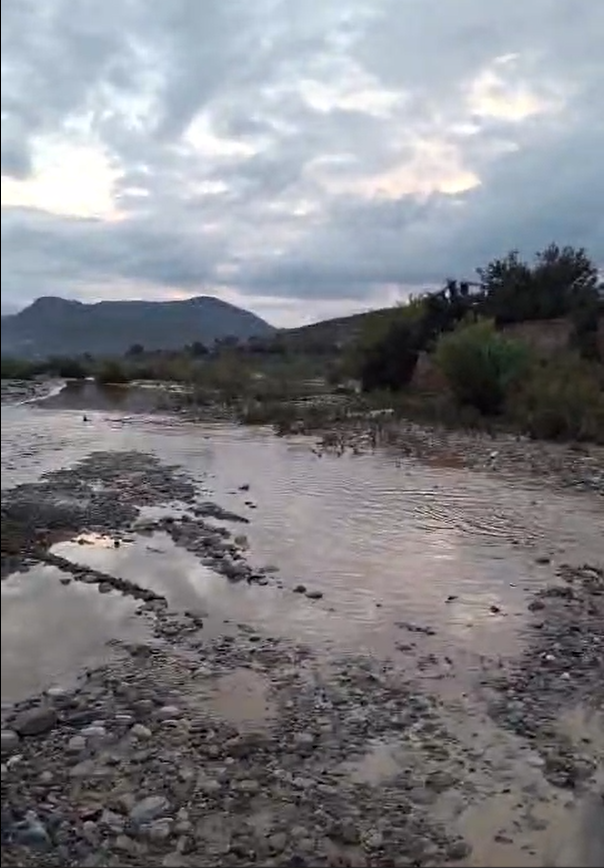
Others, particularly changes in groundwater levels or downstream flood behaviour, would require considerably more evidence and longer monitoring periods before any reliable conclusions could be reached.
At present, these remain intended outcomes rather than demonstrated achievements.
If the project can show that relatively modest interventions produce measurable improvements, it would provide a useful local example of how better land management can contribute to reversing degradation.
Equally importantly, if particular interventions fail, understanding why they failed would help inform the next stage.
The intention is to observe, intervene, measure and adapt, rather than assume that every intervention will work simply because the underlying idea is attractive.
Considering the points set out in the arguments above, I think that the simplest answer to the root cause of desertification in southern Spain, is the socio-economic drivers borne of human societies.
All animals have an impact on their environment. Their impact varies from barely noticeable to ecosystem builders that terraform vast tracts of land. Humans are particularly demanding and as our technology and culture evolves, becoming more voracious in consumption of water and carbon for fuels in its many forms. The broader implication is that socio-economic conditions have become the dominant factor & set the scene over what is possible in any setting. With the climatic conditions coupled with typical weather patterns, if it is sufficient, land will heal itself back to a stable ecosystem given enough time uninterrupted. Without direction that stability could be less than optimal for human habitation, such as dryland scrubland prone to flash flooding, depleted groundwater aquifers and long periods of drought. Unless recovery is helped along the way by restorative practices such as:
· barriers to non-native fauna,
· Abstaining from draining water through wells
· Allowing watersheds to behave as they have done before human intervention
· Hydrologically intervening in a positive way with targeted planting and earthworks.